A Second Plumber!

It was a little more than two years ago that we started our plumbing business, here in East Hampton. Chris has worked, tirelessly, to help each person who has called for help over the years. All of you have received us with such resounding support that, within the last year, we began to find ourselves filling the schedule weeks in advance, and referring work to other local plumbers in the area.

Each time I would answer one of your calls, and hear the disappointment at my mention of our soonest availability, it evoked a sense of urgency in me; to find a solution. While it has been extremely helpful having our apprentice, Dennis, join the team (who we love and are so very grateful for) the only way we could really help more people, without postponing their repairs, was to clone Chris…and while advances in science aren’t quite at the point of cloning individuals just yet, we have settled for the next best option, to bring on another licensed plumber.

Fortunately, Dylan is truly the next best thing to cloning our favorite guy. He is kind, courteous, professional and skilled in the trade. Chris and I have known him for a few years now, having met him through an old neighbor of ours, and we both really like the energy that his presence brings. Some of you may know him already, as he is a familiar face in East Hampton from growing up locally. Dylan has been working in the field, as an apprentice, with another local plumber, and recently passed his Journeyman exam with flying colors. Now, he is officially certified to perform plumbing repairs solo. We are so grateful to him, for choosing to join our team, and help us in our role to serve this community!

So now we are a team of three! (or four if you include me, behind the scenes) Our plan, for the time being, is to have Chris shadow Dylan and Dennis on most of the jobs that you book with us. We want to ensure that your experience with Badger Plumbing is consistent, with every interaction being informative, supportive and transparent. We still value positive interactions with customers, and the integrity of our staff most of all. We chose to pursue service plumbing, over new construction, because our interactions are what make this job enjoyable. So we hope you’ll call us again soon, when you need help with a plumbing repair, or feel ambitious to upgrade the plumbing in your home. When you do, we know you won’t be disappointed. Chris, Dylan and Dennis are here to help!

The Plumbing Profession:

As children, we are conditioned to contemplate our future career choice, preparing us to make our way in this world. Some parents encourage their child to lean towards a job that will bring them wealth. Other parents tell their children to do what they love so that they love what they do. Often, these suggestions don’t include the trades.

As long as humans continue to live in modern society, the world will need skilled tradesmen. The basic infrastructure of modern life was created by masons, carpenters, iron workers, welders, mechanics, plumbers, HVAC technicians, electricians, linemen, painters, dry wall finishers, insulators, glassworkers, roofers…and the list goes on. For this reason, a job in the trades offers significant job security.

While Plumbing is a respectable career choice from a financial standpoint, simply becoming a plumber won’t make you rich. Nor is it anyone’s dream to enter a profession where you will absolutely encounter human fluids and excrement on a regular basis. What we aren’t expressing to the future generation, is that there is a feeling of worth that comes with being a tradesman.

To enter a new construction site, where the future plans have not yet come to fruition, and have the knowledge and ability to construct an effective water and waste system for that new structure, is empowering. To be invited into someones home, bear witness to their most intimate spaces in life, and have the ability to save them from hygienic collapse, is humbling.

Plumbers have to be strong, intelligent, compassionate, and driven. They must be disciplined to learn the trade, and maintain knowledge of modern progress and technology within the trade. Most states in the US require plumbers to be licensed at the state level. In the states that do not, there are often strict city or county requirements. Some states actually offer several choices of specialized plumbing licenses, which cover a variety of different plumbing systems.

In general, the process of becoming a plumber requires schooling, an apprenticeship, on the job training and the passing of an extensive exam. If an individual has interest in plumbing, prior to high school, they can pursue a vocational school to get a head start on their trade credits. If the decision to enter the trade is made after high school, there are many college level programs available. Here, in the state of Connecticut, an individual must complete 576 classroom hours and 8000 training hours, in an apprenticeship position, to receive their P2(Journeyman) license, allowing them to work for a plumbing company. In order to own their own company, they must work as a Journeyman for 2 years/4000 training hours, and pass another exam to get their P1(Unlimited Plumbing and Piping license).

The plumbing profession is one to be proud of. Only two centuries ago, our country consisted of primitive homesteads, with no running water. It is because of plumbers that there has been a great deal of change and advance, leading to the modern systems that we know today. These systems allow us to maintain healthy environments in which to live and work. Without them, infection and disease would, once again, be prevalent in our nation. The future will hold even more change, and will call on individuals with the want and ambition to join in the cause.

So you’d like an estimate over the phone…

You have a plumbing issue you see as an easy fix. Or maybe there’s a huge project that you’ve been wanting to get done. Or you have a plumbing emergency that needs someone there sooner, rather than later. While the ideal route most people take is to call a few plumbing companies and request over-the-phone estimates, this does not provide you with accurate quotes.

If you call a company and they tell you the cost of a project without getting eyes on it first, there may be additional charges added on later. The reason for this is the unforeseen challenges that often present themselves in plumbing repairs. Here are a couple examples of situations where a straightforward repair can turn into a more elaborate job:

*A toilet that keeps running:
A company that offers a phone estimate might tell you that it sounds like an issue with the flapper and they can come change it out for the charge of a minimum service fee.
Unknowns
Age of the toilet. Condition of surrounding components. Water pressure of the home.
-Is the flapper actually leaking or is it the flush tower gasket?
-Maybe the fill valve is not shutting off when the water reaches the correct height.
**In the end, the “flapper repair” may have actually been a toilet replacement

*A pinhole leak in a pipe:
A company that offers a phone estimate might tell you that it’s as simple as cutting out and replacing the compromised section. This would likely be quoted a straightforward copper repair charge.
Unknowns
Location of the leak. Type of piping. Condition of the surrounding pipes.
Is the leak caused by corrosion inside of the pipe, due to water with a low pH? If so, a repair can very likely cause additional leaks to appear along the line when water pressure is reintroduced after the initial repair.
**A simple copper repair could turn into a full system re-pipe.

Unfortunately, situations like these are where plumbers get that reputation of telling you one price and charging another. I have experienced so many different outcomes, in what seem like straightforward jobs, that it would be irresponsible of me to offer a quote without getting my eyes on the situation first.

I understand that customers don’t want to have to pay trip charges to three different companies, in order to shop prices. Sometimes those trip fees can add up to more than the project itself. While I currently do not charge a fee to come to look at the job and give a quote, larger companies generally do because, in the words of Dwight Schrute, “gas ain’t free” and they have to cover their cost of overhead. Oftentimes, these larger companies offer to apply a portion of the trip charge to your bill if you go with them for the repair, which can be helpful. But in the end, your best bet is to get a plumber to your home. If they look at the job and have an in depth explanation of what needs to be done, including the “what if’s” that are present you will be able to make a more educated decision on how you want to proceed without the risk of an unexpected bill.

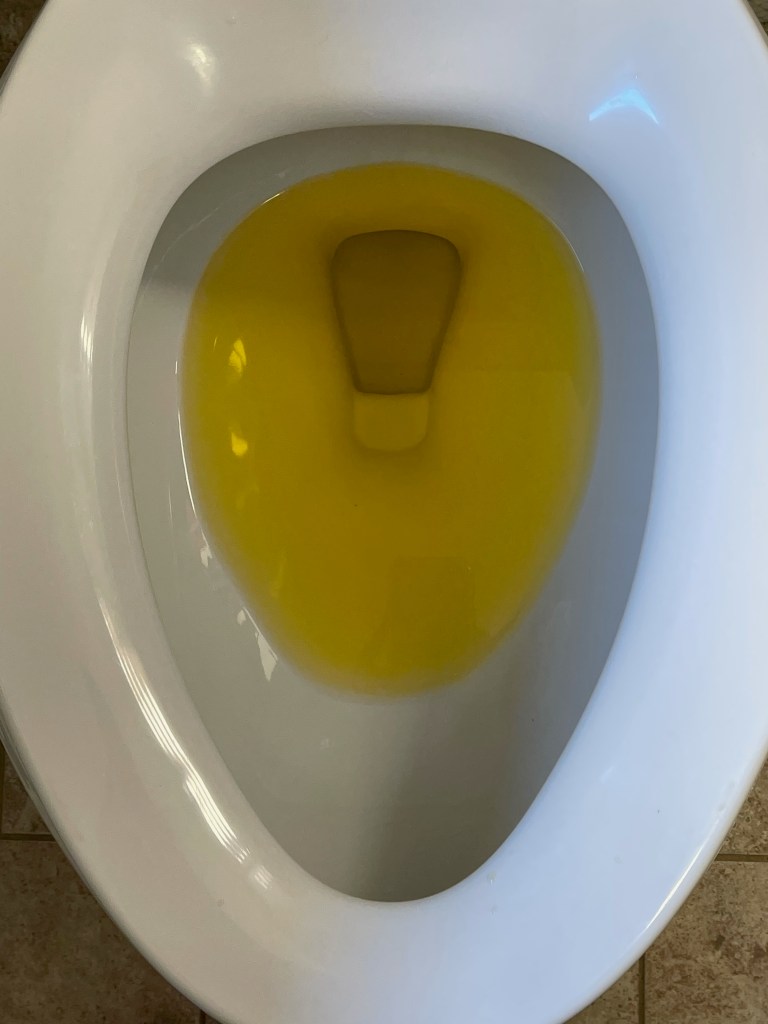
Do you pee on your plumber?

Your plumber is downstairs, repairing a leaky waste pipe. You’ve made a point to use the sink and toilet ahead of time, so you don’t run water down the pipes. As you sip your morning beverage and catch up on some reading your bladder tells you you’re ready for another potty break. No big deal; you can use the toilet as long as you don’t flush…right?

Plumbers across the globe are peed on every day due to this common misconception.

While water and waste would absolutely rush through the pipes if a faucet were turned on or a toilet were flushed, a simple trip to the toilet with an innocent #1 can also cause a trickle down the pipes. The reason for this is displacement.

Your toilet is designed to keep the water level, in the bowl, constant. When added contents in the bowl cause the water to raise or lower, the toilet will naturally level it back out. In the case of a rise in water (due to the addition of urine), head pressure in the toilet causes a portion of the toilet water to displace down the drain.

So if your friendly neighborhood plumber is hard at work fixing your waste pipes, give them a holler, when you find yourself in this predicament, and they can simply step back and place a bucket under the pipe to avoid a smelly shower.

Why Should You Have Your Hot Water Heater’s Tank Flushed Regularly:

Over time minerals from your water begin to build up in the bottom of your hot water heater’s tank. This sediment is present whether you get your water from a municipal source or private well. These mineral deposits can lead to things like premature failure of electric heating elements and, in both electric and gas units, reduced heat transfer; which results in an increased usage of gas or electricity. One of the other unfortunate outcomes that can happen is that the tank itself can deteriorate from the inside. This isn’t something we can actually see due to heaters having something called a jacket on the outside. Under the jacket is a layer of insulation and under that is the actual tank, so getting eyes on potential leaks is almost impossible. Home owner associations (HOA’s) for connected structures, like condominiums and town houses, often require homes in their networks to change their heaters every tens years to avoid the structural damage that is caused by water heater failure.

The unit pictured here is an example of a failed electric water heater. It split open due to water being overheated, and expanding, which created excess pressure inside the tank. The sediment had built up around the base of the tank high enough that it impeded on the thermostat’s ability to register the correct temperature. Heaters are equipped with a T&P valve (temperature and pressure valve), to manage situations like this, but they can fail over time as well. If functioning, the valves are meant to release water when the temp or pressure becomes too great. Flushing a heater, and getting it inspected annually can help prevent situations like this from happening.

I recommend a hot water heater be flushed about once a year. This could be done by any licensed plumber. The plumber should also check the T&P valve to make sure it releases, the anode rod, for deterioration and make sure that the expansion tank is not water logged. For electrical heaters, checking the elements and thermostats is also beneficial.

Our Business Startup-A photo journal

Now that we are officially opened for business we would like to share some snapshots of our journey thus far.


The night we got the truck was when the process began to feel real.

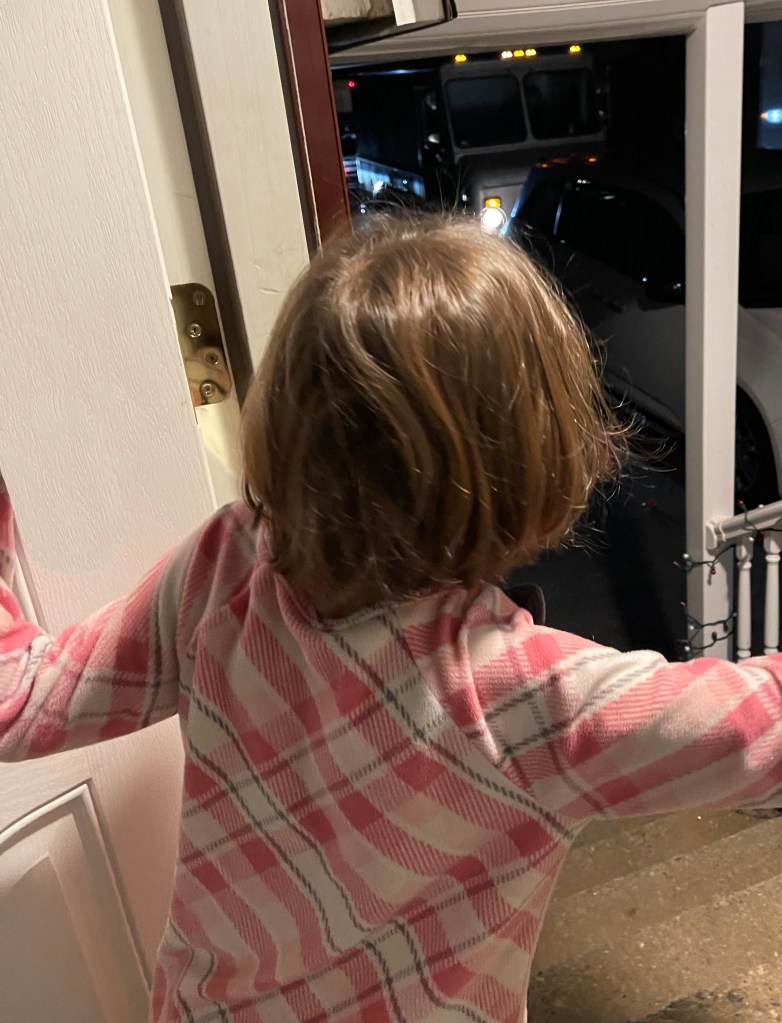
The kids were waiting to greet Chris when he got home.

It was late and cold but the excitement lured them out to investigate.

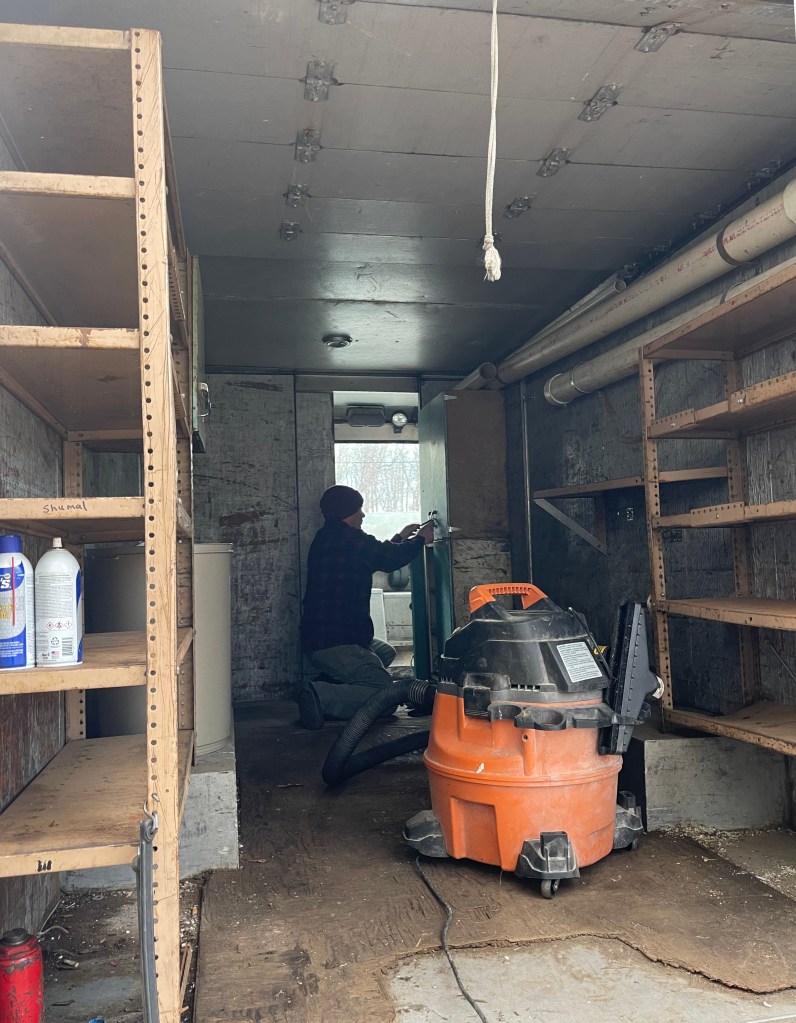
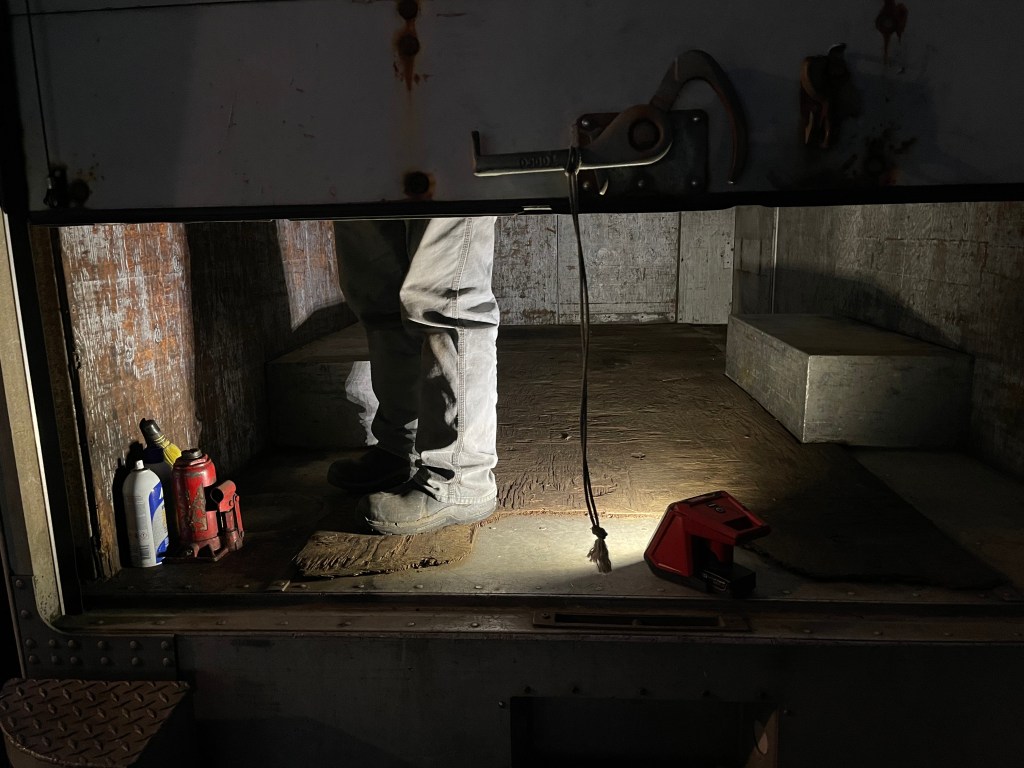
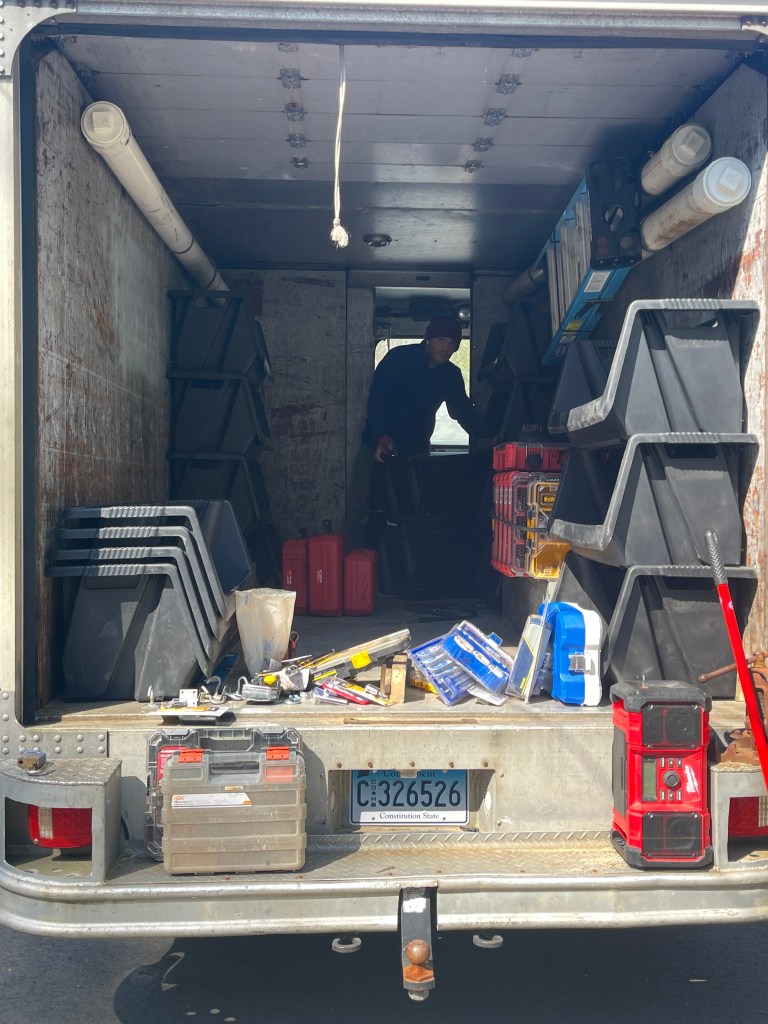
The back of the truck was filled with old tools and supplies from the previous owner and Chris was like a kid in a candy store, going through it all.

Once emptied, we disassembled shelves, vacuumed debris and worked late into the night to begin making it our own.

As we worked to prepare the truck, Chris studied hard for his licensing exam while still maintaining his day job.

He took the test in the morning and met the girls at the bus stop in the afternoon. They were eager to ask how it went, and excited when he shared that he passed.

We set up the business phone line around the time of our sons 13th birthday. Our gift to him was his very own data plan.

On our way home from the errand we were trying the different lines and were excited to see the business contact displayed on the screen in the car.

Rebecca was making a lot of progress, behind the scenes; from registering the business to filing for an EIN number to creating a website and commissioning a logo. It was a big event in our house when we had to make a decision between our two logo finalists.

With the new DMV appointment system, registering the truck was a breeze. Once we had it registered and insured, we were finally able to get it into the shop for repairs.

Next, it was time for Chris to set up and stock the truck.

Chis did a wonderful job organizing his space and getting it set up for work.

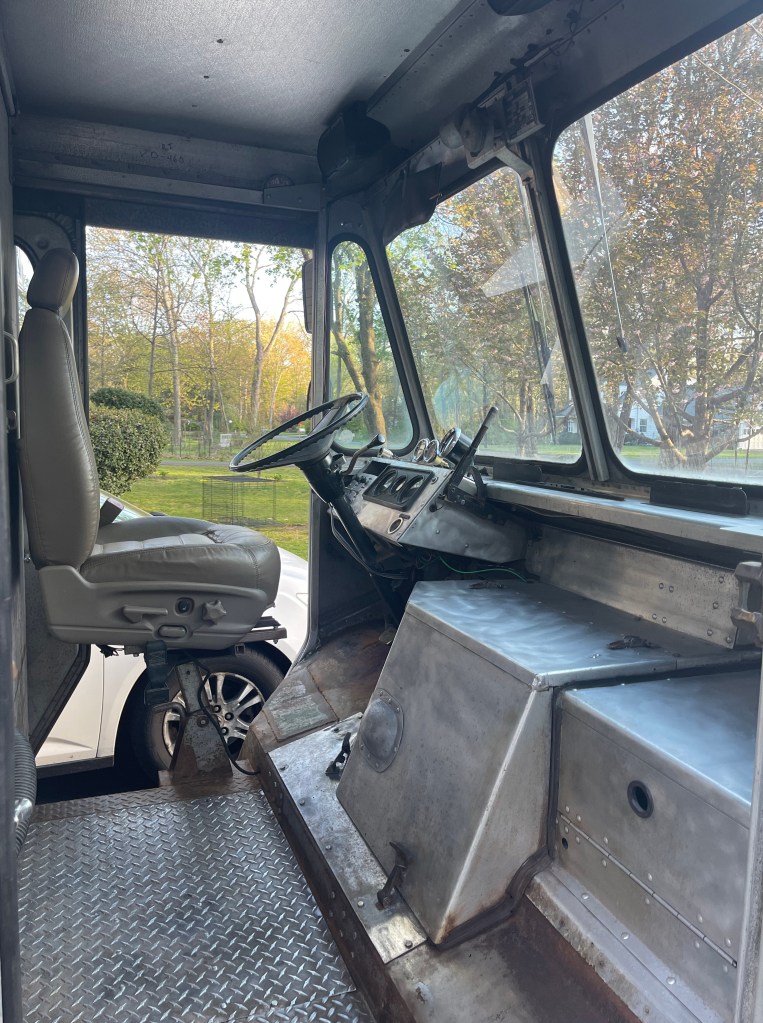
Rebecca, unable to help with plumbing supplies, tackled the job of cleaning the truck cab.

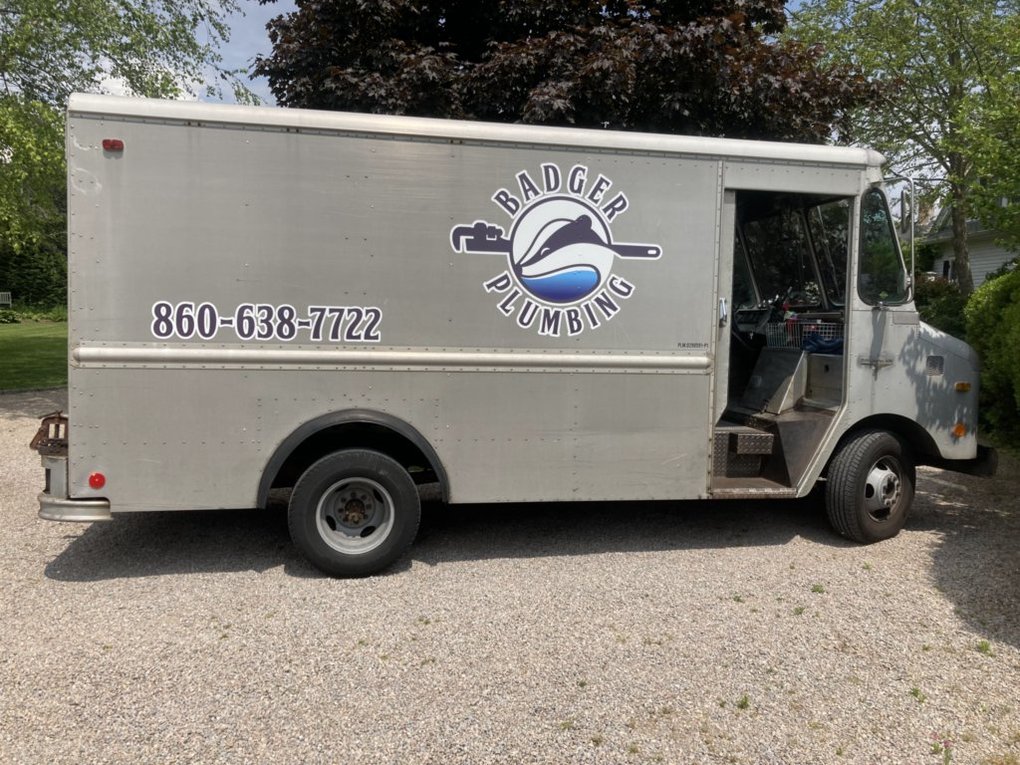
It felt good to breathe new life into the old girl, who we now lovingly call Badger 1

So now we’ve sanded down the rear door and soon we will be applying a fresh coat of paint and having our logo adhered to the three sides, so you know it’s us.

In the meantime, if you see Badger 1 out and about, while Chris is tending to jobs, give her a honk, and him a wave.

We appreciate you!

*Update* Badger 1 was looking and running great after her decals were put on! Unfortunately, she needed some maintenance in late August, which required us to acquire another vehicle to keep the business running. The old girl served us well for the first few months of business but may need more mechanical know-how than we can give her.

We have purchased a new truck, Badger 2, and will post a photo once she’s “in uniform”.

3 Quick Tips from a Plumber (and his wife):

• Bleach is no good for cleaning your toilet tank

Bleach is a wonderful product that “germaphobes” like me take solace in using often. That being said, it does a number on the rubber components inside of your toilet (all the bits and pieces that keep the water from leaking onto your floor). I recommend using a gentle cleanser, like dish soap, or for a more natural approach, white vinegar. If you still want that “oh so fresh” smell in the bowl you could invest in a toilet that has a separate compartment in the tank (like Kohler’s Continuous Clean) or purchase a product that creates a similar compartment, as an add-on (like Fluidmaster’s Flush ‘n Sparkle system).

• Using “flushable wipes” never ends well for your plumbing

In my years of working as a plumber I have come across many clogged lines that are the result of flushable wipes. No matter what the marketing tells you, I can attest to the fact that they do not flush well! Whether you have a new house or something built in the 1920’s, they find a way to wreak havok. They DO NOT break down like toilet paper! Not only do they cause issues within the home’s sewage system, but I have personally seen these wipes create a clog large enough to back up sewage for an entire street. If you don’t believe me, check out this article from Today

• Don’t use a plunger to unclog a toilet!

All of the cartoons and entertainment stereotypes have brainwashed us to believe that a clogged toilet = plunger. Unfortunately, doing so can cause more harm than good.
Imagine you’re toilet filled to the brim with waste. The only thing preventing that murky water from seeping onto your floor is a small wax seal. When a plunger is used, pressure and suction can dislodge this wax seal, causing a leak that requires an unnecessary (and pricy) repair to fix. My go-to fix for when my children clog the toilet (using a whole roll of toilet paper) is the use of a Rigid Toilet Auger.