Your plumber is downstairs, repairing a leaky waste pipe. You’ve made a point to use the sink and toilet ahead of time, so you don’t run water down the pipes. As you sip your morning beverage and catch up on some reading your bladder tells you you’re ready for another potty break. No big deal; you can use the toilet as long as you don’t flush…right?
Plumbers across the globe are peed on every day due to this common misconception.
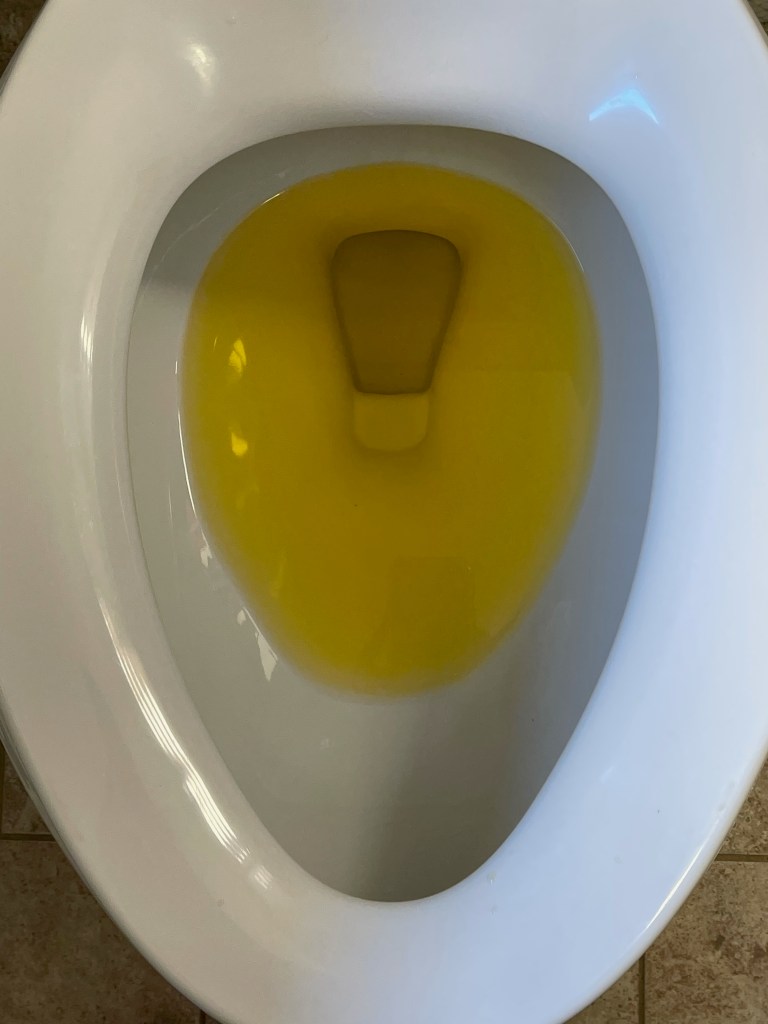
While water and waste would absolutely rush through the pipes if a faucet were turned on or a toilet were flushed, a simple trip to the toilet with an innocent #1 can also cause a trickle down the pipes. The reason for this is displacement.
Your toilet is designed to keep the water level, in the bowl, constant. When added contents in the bowl cause the water to raise or lower, the toilet will naturally level it back out. In the case of a rise in water (due to the addition of urine), head pressure in the toilet causes a portion of the toilet water to displace down the drain.
So if your friendly neighborhood plumber is hard at work fixing your waste pipes, give them a holler, when you find yourself in this predicament, and they can simply step back and place a bucket under the pipe to avoid a smelly shower.
Over time minerals from your water begin to build up in the bottom of your hot water heater’s tank. This sediment is present whether you get your water from a municipal source or private well. These mineral deposits can lead to things like premature failure of electric heating elements and, in both electric and gas units, reduced heat transfer; which results in an increased usage of gas or electricity. One of the other unfortunate outcomes that can happen is that the tank itself can deteriorate from the inside. This isn’t something we can actually see due to heaters having something called a jacket on the outside. Under the jacket is a layer of insulation and under that is the actual tank, so getting eyes on potential leaks is almost impossible. Home owner associations (HOA’s) for connected structures, like condominiums and town houses, often require homes in their networks to change their heaters every tens years to avoid the structural damage that is caused by water heater failure.
The unit pictured here is an example of a failed electric water heater. It split open due to water being overheated, and expanding, which created excess pressure inside the tank. The sediment had built up around the base of the tank high enough that it impeded on the thermostat’s ability to register the correct temperature. Heaters are equipped with a T&P valve (temperature and pressure valve), to manage situations like this, but they can fail over time as well. If functioning, the valves are meant to release water when the temp or pressure becomes too great. Flushing a heater, and getting it inspected annually can help prevent situations like this from happening.
I recommend a hot water heater be flushed about once a year. This could be done by any licensed plumber. The plumber should also check the T&P valve to make sure it releases, the anode rod, for deterioration and make sure that the expansion tank is not water logged. For electrical heaters, checking the elements and thermostats is also beneficial.
Now that we are officially opened for business we would like to share some snapshots of our journey thus far.
The night we got the truck was when the process began to feel real.
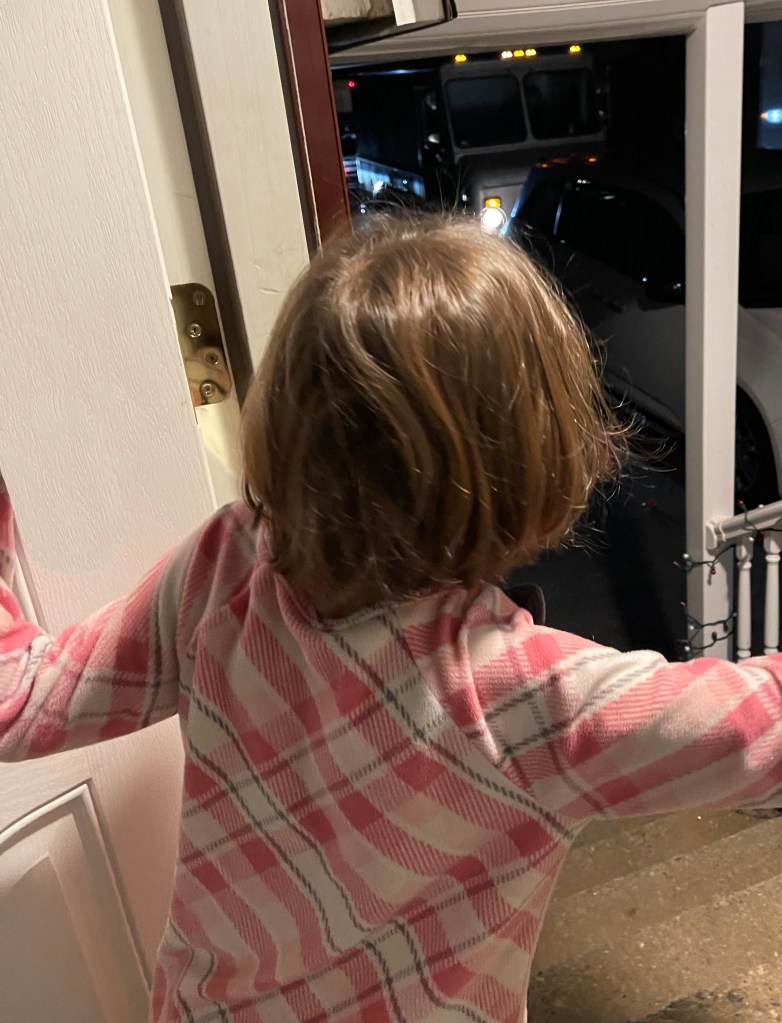
The kids were waiting to greet Chris when he got home.
It was late and cold but the excitement lured them out to investigate.
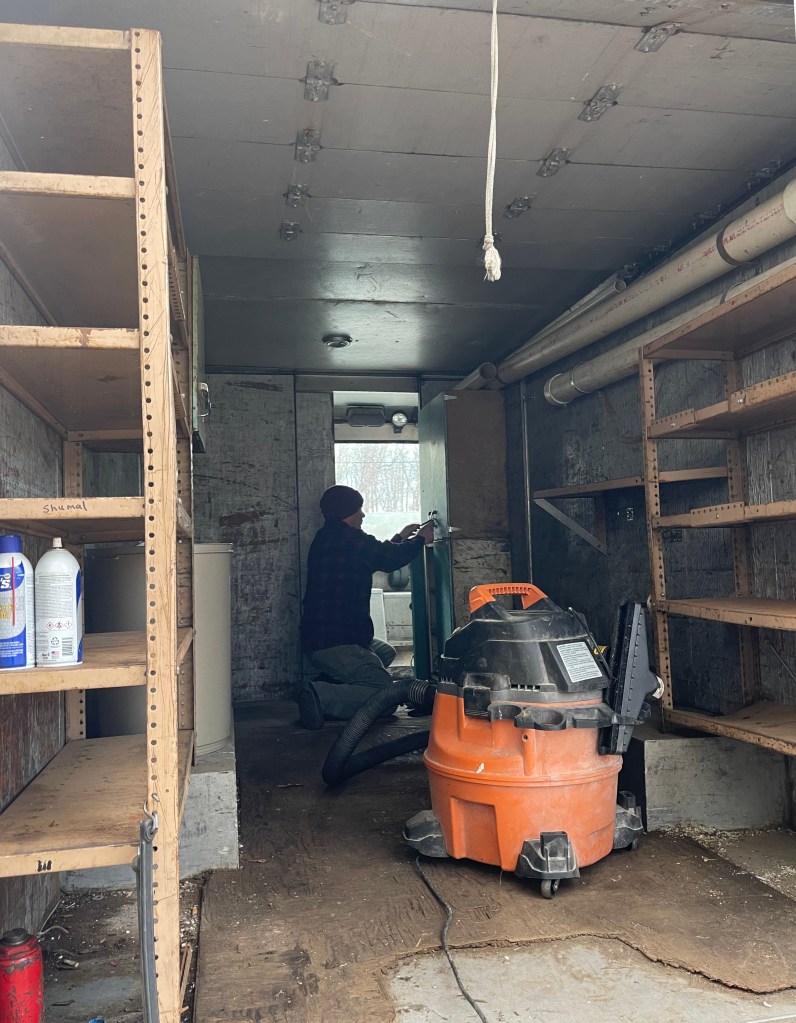
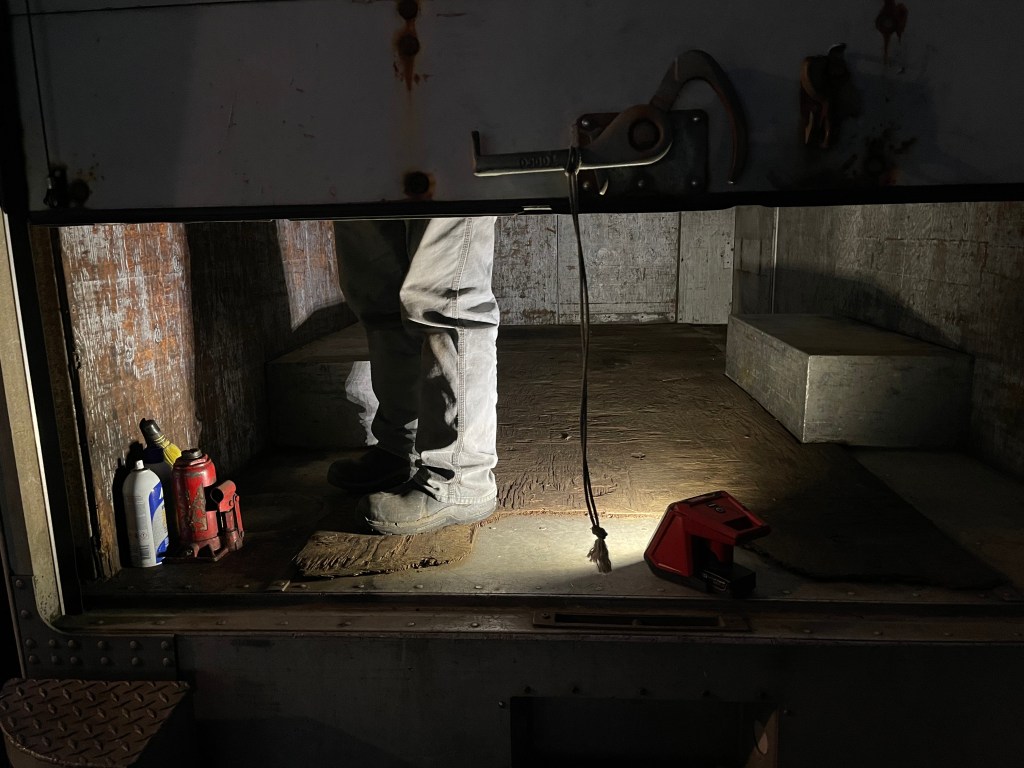
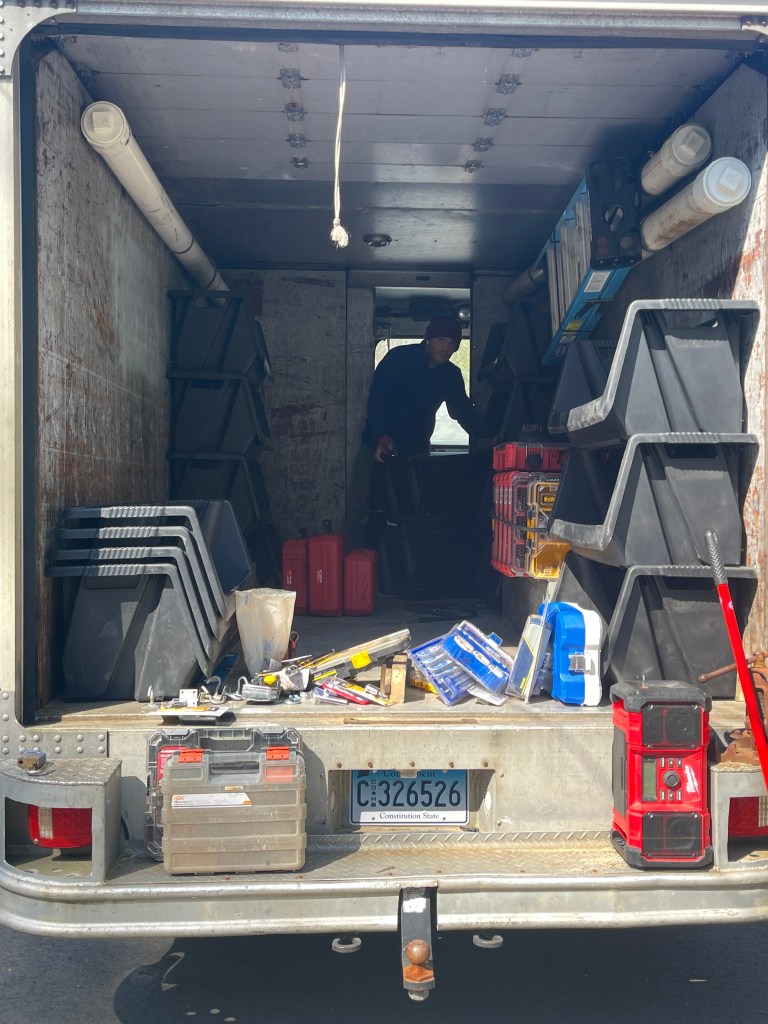
The back of the truck was filled with old tools and supplies from the previous owner and Chris was like a kid in a candy store, going through it all.
Once emptied, we disassembled shelves, vacuumed debris and worked late into the night to begin making it our own.
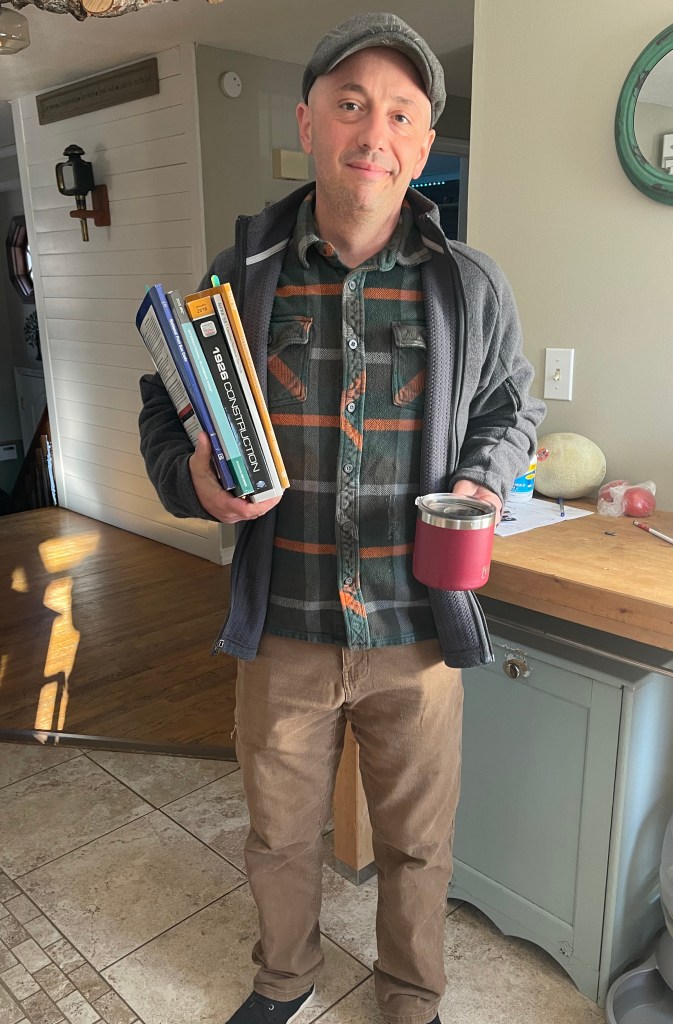
As we worked to prepare the truck, Chris studied hard for his licensing exam while still maintaining his day job.
He took the test in the morning and met the girls at the bus stop in the afternoon. They were eager to ask how it went, and excited when he shared that he passed.
We set up the business phone line around the time of our sons 13th birthday. Our gift to him was his very own data plan.
On our way home from the errand we were trying the different lines and were excited to see the business contact displayed on the screen in the car.
Rebecca was making a lot of progress, behind the scenes; from registering the business to filing for an EIN number to creating a website and commissioning a logo. It was a big event in our house when we had to make a decision between our two logo finalists.
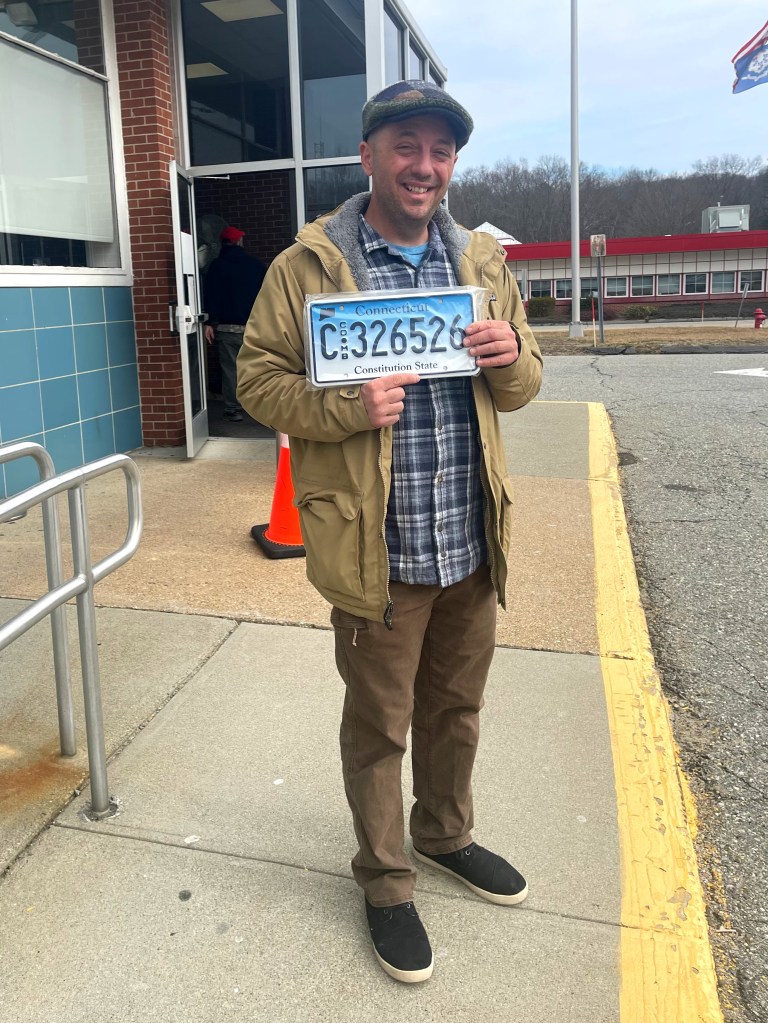
With the new DMV appointment system, registering the truck was a breeze. Once we had it registered and insured, we were finally able to get it into the shop for repairs.
Next, it was time for Chris to set up and stock the truck.
Chis did a wonderful job organizing his space and getting it set up for work.
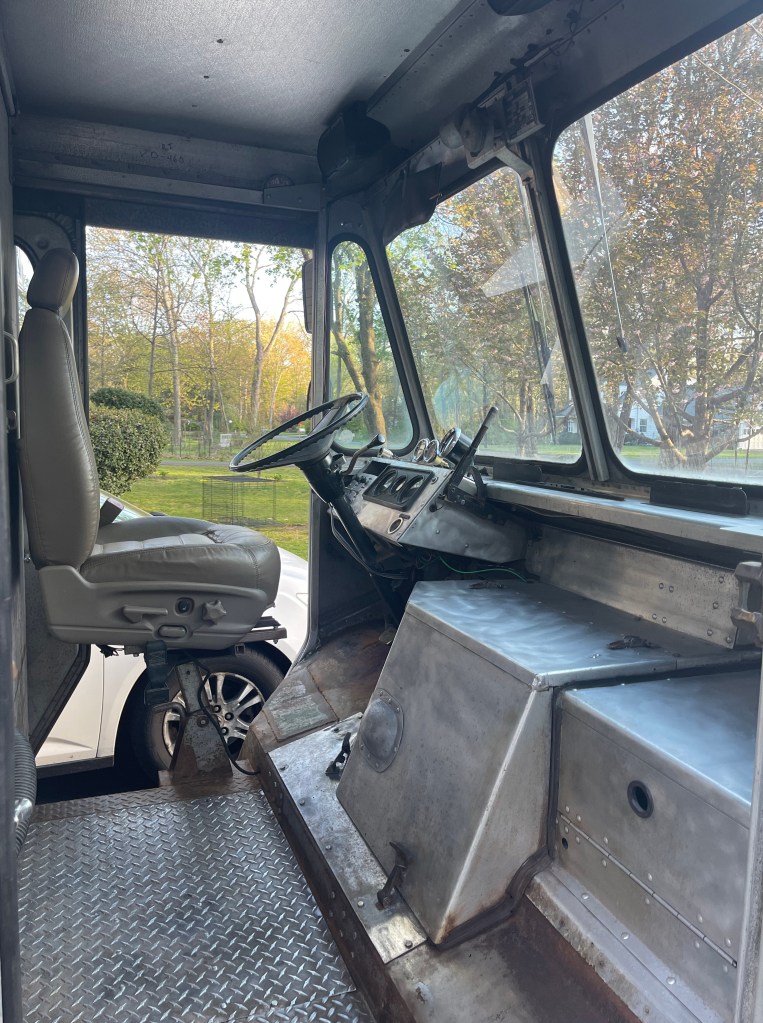
Rebecca, unable to help with plumbing supplies, tackled the job of cleaning the truck cab.
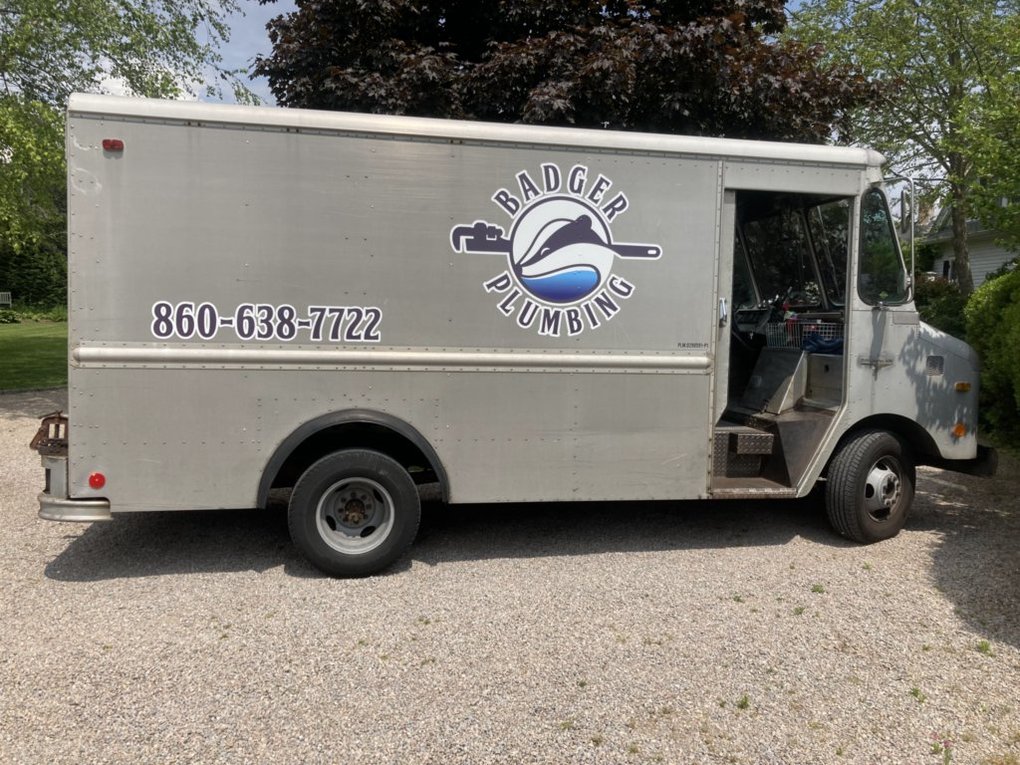
It felt good to breathe new life into the old girl, who we now lovingly call Badger 1
BeforeAfter
So now we’ve sanded down the rear door and soon we will be applying a fresh coat of paint and having our logo adhered to the three sides, so you know it’s us.
In the meantime, if you see Badger 1 out and about, while Chris is tending to jobs, give her a honk, and him a wave.
We appreciate you!
*Update* Badger 1 was looking and running great after her decals were put on! Unfortunately, she needed some maintenance in late August, which required us to acquire another vehicle to keep the business running. The old girl served us well for the first few months of business but may need more mechanical know-how than we can give her.
We have purchased a new truck, Badger 2, and will post a photo once she’s “in uniform”.












 Badger Plumbing LLC